
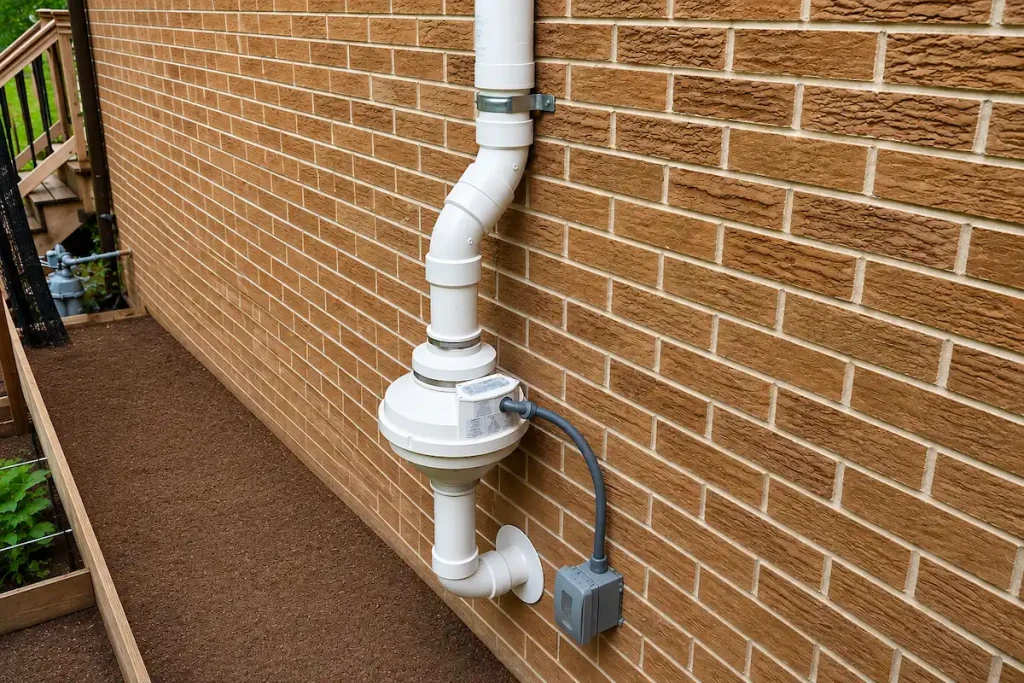
Harvey noticed it one morning while getting coffee. A low hum had come from the basement for years, barely registering. Lately, though, the sound had changed. It was louder and rougher, with a faint rattle he couldn’t place. His radon system had run quietly for almost a decade. Now the new noise had his attention. He wasn’t sure if it meant a minor nuisance or a warning sign.
Radon fans run nonstop, 24 hours a day. That constant operation wears parts down over time. Not every change in sound signals an emergency. But some noises point to a real problem, and a weak fan cannot keep radon levels low. Telling the difference matters. If you are not sure how your system works, start with our overview of how radon mitigation works before you dig into the radon fan noise question.
The fan is the heart of an active system. Its job is simple. It creates continuous negative pressure under your foundation and routes radon gas outside before it reaches your living space. Our guide to what a radon mitigation system includes covers the other parts, but the fan does the real work. So when it starts making odd sounds, pay attention rather than wait.
Key Takeaways
Some fan noise is normal: A steady low hum or gentle rush of air sounds normal and does not signal a problem.
Bearing wear is a common culprit: Grinding, rattling, or a high-pitched squeal often means worn motor bearings, a normal result of years of nonstop running.
Vibration noises have a simple fix: A loose pipe connection or a fan that touches the pipe can rattle or buzz, and a technician usually fixes it fast.
A quiet fan can be worse than a loud one: A fan that has stopped means no radon protection at all.
Fans last 5 to 10 years: Noise in an older system often means a replacement is near.
Noise alone does not tell the whole story: Confirm performance with a radon test or monitor, because a loud fan can still work and a quiet one can still fail.
If your fan sounds different than it used to, call Radon 1 at (615) 257-9818 to schedule a system inspection.
What Does a Normal Radon Fan Sound Like?
A healthy radon fan makes a steady, low hum. Most homeowners stop noticing it within a few weeks. The sound resembles a bathroom exhaust fan running in a distant room. Some airflow noise near the pipe or fan housing is normal too. If your system has always hummed quietly and that sound has not changed, you have no cause for concern.
The key word is consistent. Normal operation sounds predictable and stable. A change from that baseline is what deserves attention. Watch for a fan that suddenly gets louder, develops a new rhythm, starts rattling, or makes sounds it never made before.
What Causes Radon Fan Noise?
Bearing wear inside the motor is the most common cause. Because the fan never stops, the bearings that let the motor spin smoothly wear down over time. As they degrade, the smooth hum turns rough. People often describe grinding, buzzing, or a high-pitched squeal. This is mechanical wear, and it usually means the fan is nearing the end of its life.
Vibration is another frequent cause, and people often mistake it for a motor problem. The fan connects to PVC pipe. If that connection loses its vibration isolation or a fitting works loose, the motor’s normal vibration travels straight into the pipe. PVC carries and amplifies vibration well. So a loose connection can rattle or hum far louder than the real issue warrants. A technician can usually fix it quickly by tightening connections and adding vibration dampening.
Debris is less common but worth a mention. Now and then, insects, moisture, or debris enters the pipe and brushes the blades. That contact produces irregular sounds or intermittent clicking. Outdoor termination points without proper protection face the most risk.
Airflow restriction can also make a fan labor and run louder. If something blocks the suction path under the foundation, the fan fights extra resistance. This can follow a renovation that accidentally seals off the sub-slab area. It can also happen in a crawl space system if the membrane shifts.
Is the Fan Failing or Just Noisy?
Noise alone does not confirm whether the fan still does its job. A worn fan can still pull enough suction to keep radon low. Meanwhile, a fan that sounds fine might have a partly blocked pipe. So listening is only one part of the picture.
Your manometer gives the most reliable check. It is the small U-shaped tube on the pipe near the fan. Colored fluid inside shows whether the fan creates a pressure difference. Equal fluid on both sides means the fan probably is not pulling, even if it spins. Uneven levels mean the fan is working, which is what you want. Any homeowner can check this in seconds, no tools needed.
A radon test or continuous monitor tells you what matters most. It shows whether your levels stay below the EPA action level of 4.0 pCi/L. A post-mitigation radon test is the surest way to confirm the system still protects your home. If new noise appears alongside rising readings, treat that combination as a clear call for professional help. Our guide to the signs your radon mitigation system needs repair covers other warning indicators, including manometer changes and visual clues.
Should You Replace the Fan or Repair the System?
The right choice depends on the cause and the age of the system. Fans typically last 5 to 10 years. If your system falls in that range and the bearings are worn, replacing the fan is usually the answer. It is a targeted fix that restores performance without touching the piping.
If vibration at the pipe connections causes the noise, a repair may be enough. A technician can isolate the fan from the pipe with proper mounting hardware and secure every fitting. That often ends vibration noise without a new fan.
Older systems sometimes show several issues at once. A failing fan may pair with worn seals, corroded pipe penetrations, or a dead manometer. Those cases call for a fuller assessment. A complete review also shows whether the original design still fits the home. Our guide to radon fan replacement explains the process and what a professional install involves.
Avoid one tempting shortcut. Do not silence the fan by unplugging it. A system that sits off provides no protection. The EPA recommends that active systems run continuously, and any gap lets radon build up indoors. If the noise bothers you, the fix is diagnosis and repair, not shutdown.
Does Radon Fan Noise Affect Your Radon Levels?
Not directly, but the link matters. Noise often signals reduced performance rather than total failure. Reduced performance means the system may not hold enough sub-slab suction. Radon can then creep upward slowly, often without an obvious alert unless you retest.
The CDC recommends retesting every two years after mitigation. A continuous monitor adds ongoing visibility and flags changes that periodic tests can miss. If your last test is more than two years old and your fan sounds new, pair a fan inspection with a fresh radon measurement.
Radon 1’s NRPP-certified technicians (certification ID: 109455 RMS / 115130 RMS) can judge the fan’s condition and verify performance with post-service testing. The team has installed more than 20,000 systems across Tennessee, Kentucky, Alabama, Georgia, and North Carolina over 20-plus years. They have heard every kind of fan noise and can tell a minor vibration from a genuine failure.
Frequently Asked Questions
Is it normal for a radon fan to hum constantly?
Yes, a continuous low hum is expected from a properly operating radon fan. Radon fans run 24 hours a day without shutting off, so a steady background noise is part of normal system behavior. The sound should remain consistent; changes to the tone, volume, or pattern are what warrant a closer look.
Can I fix a noisy radon fan myself?
A loose pipe fitting or a fan touching the pipe can cause rattling, and a technician can usually fix it quickly. Internal motor problems, bearing wear, and anything that requires opening the fan housing or assessing sub-slab suction should always be handled by a certified technician. Attempting repairs without understanding the system can compromise performance. Choosing a qualified radon mitigation contractor is worth the time when the issue involves the fan motor or suction pathway.
How much does radon fan replacement cost?
Fan replacement costs vary based on the fan model required for your specific system, labor, and any additional repairs identified during the inspection. Radon 1 provides estimates that include materials, labor, and post-replacement verification testing so you know the system is performing after the work is done. Call (615) 257-9818 for a straightforward estimate.
My fan stopped making noise entirely. Is that good?
Not necessarily. A fan that has gone silent may have stopped running completely rather than improving. Check your manometer immediately. If the fluid levels are equal on both sides, the fan is likely not generating suction. A dead fan means your home has no active radon protection, which is more urgent than a fan that’s noisy but still pulling. Contact a technician promptly if your manometer shows no pressure differential.
How noticeable are radon mitigation systems in general?
Most systems are installed in unobtrusive locations with piping routed along interior walls or through utility spaces, and the fan noise at normal operation is minimal. How noticeable a radon mitigation system is addresses placement, aesthetics, and what homeowners typically experience after installation.
Radon 1 serves homeowners in three Tennessee metro areas. See our pages for Nashville radon mitigation, Knoxville radon mitigation and Chattanooga radon mitigation.
If your radon fan has changed its sound, don’t ignore it. Call Radon 1 at (615) 257-9818 to schedule a system inspection with an NRPP-certified technician. The team serves homeowners across Tennessee, Kentucky, Alabama, Georgia, and North Carolina and can assess your fan, check system performance, and recommend the right repair or replacement so your system runs quietly and effectively again.